
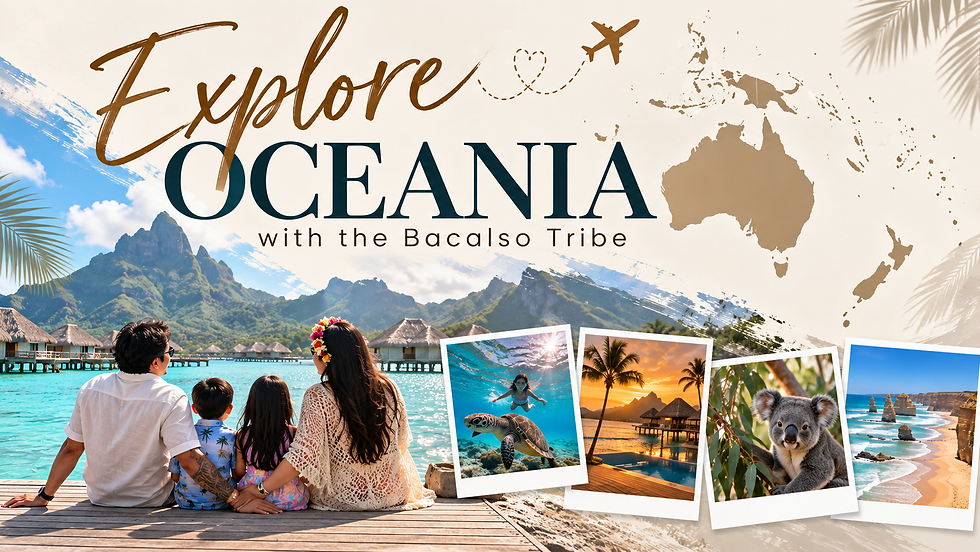


Oceania is a region filled with incredible contrasts—from turquoise lagoons and tropical islands to rugged mountains, ancient rainforests, vibrant cities, and some of the most breathtaking landscapes in the world. With 14 independent countries and thousands of islands to explore, there is always somewhere new waiting for us.
For the Bacalso Tribe, exploring Oceania means discovering incredible cultures, beautiful islands, and unforgettable adventures across the Pacific. From the stunning beaches of Fiji and French Polynesia to the breathtaking landscapes of New Zealand and Australia, every destination offers something different and another story to bring home.
The Pacific Islands are full of adventure. Fiji, Samoa, Tonga, Vanuatu, French Polynesia, Palau, and beyond offer crystal-clear waters, colorful coral reefs, lush jungles, waterfalls, volcanic landscapes, and incredible marine life. Whether we're swimming in turquoise lagoons, snorkeling with tropical fish, exploring waterfalls, hiking through rainforests, or experiencing local island traditions, there is always something new to discover.
Then there are the incredible cities of Oceania—Sydney, Melbourne, Auckland, Brisbane, Queenstown, Honolulu, and beyond—each with its own personality, culture, scenery, and unforgettable experiences. And, of course, we can't talk about Oceania without talking about the food! From fresh seafood and tropical fruits to Australian favorites, New Zealand specialties, and traditional Pacific Island dishes, every destination brings its own flavors and memories.
We may not be able to see every island and corner of Oceania in one lifetime, but we're going to enjoy the journey—one country, one island, one adventure, and one family memory at a time.
There’s really no bad time to explore Oceania. From the tropical islands of the South Pacific to the dramatic landscapes of Australia and New Zealand, every season offers something special. From beautiful beaches and coral reefs to rainforests, mountains, waterfalls, vibrant cities, and incredible road trips, there’s always a new adventure waiting for the Bacalso Tribe.
One thing to keep in mind when planning your trip is that Oceania covers a huge area and has very different climates depending on where you go. Australia and New Zealand experience seasons opposite to the Northern Hemisphere, while many Pacific islands enjoy warm tropical weather throughout much of the year. Australia can range from tropical conditions in the north to cooler weather in the south, while New Zealand can bring snow and winter adventures in its alpine regions. The Pacific Islands can also have distinct wet and dry seasons, so it’s always worth checking the climate of your specific destination before booking your trip.
If you’re traveling on a budget, don’t automatically choose the busiest travel season. Visiting during the shoulder seasonscan sometimes mean lower hotel rates, fewer crowds, and better travel deals. You may also find great value by traveling during less popular months, depending on your destination. And sometimes, a little rain, cooler weather, or changing conditions can make an adventure even more memorable.
For the Bacalso Tribe, the best time to visit Oceania really comes down to where you want to go, what you want to experience, and how you like to travel. Whether we’re exploring the beaches of Fiji, snorkeling in French Polynesia, taking a road trip through New Zealand, discovering Australia’s incredible wildlife, or experiencing the cultures of the Pacific Islands, every season brings a different experience.
We may not be able to see every corner of Oceania in one trip, but we’re going to enjoy the journey—one country, one island, one adventure, and one family memory at a time.
Ready to start planning your Oceania adventure? Explore our favorite destinations, travel tips, and family adventures across Oceania with the Bacalso Tribe.


